

How does the ergonomic design of a children's chair affect a child's sitting posture?
Apr 08, 2025
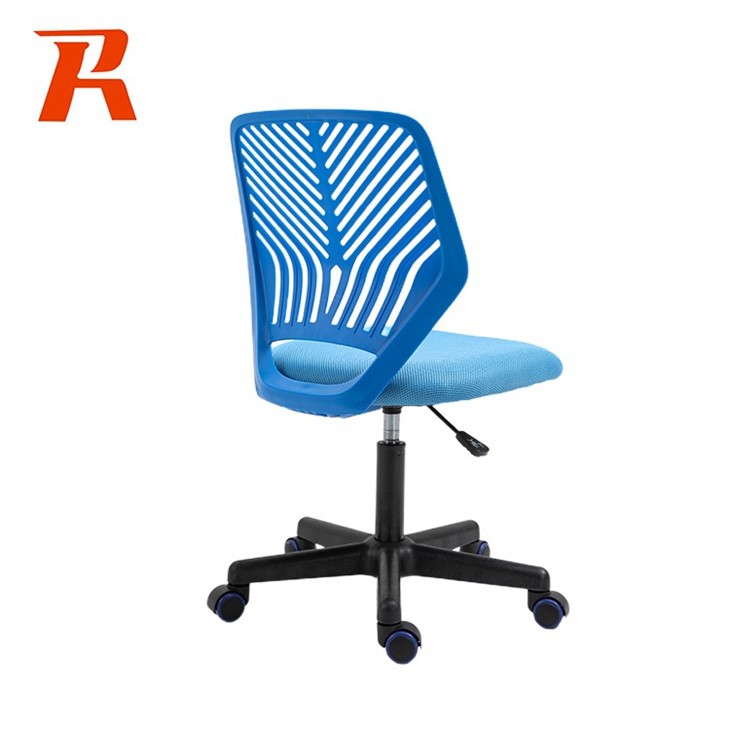
When children suffer from poor sitting posture for a long time, such as problems with chest holding, hunched back, sloping shoulders, etc., parents often attribute it to the child's own lack of awareness of correct sitting posture, but they ignore a more essential issue - whether the design of the chair is truly suitable for the child's body structure. Children's chairs that are cute in appearance but lack functionality do not take into account the child's height, spinal development stage and usage habits. In contrast, ergonomic children's chairs pay more attention to the support of the back, waist and thighs, avoiding bad sitting postures such as chest inclusion and skew caused by problems such as too high a chair surface and unreasonable backrest angles. The following article will explain the positive impact of the ergonomic design of children's chairs on sitting posture from multiple angles.
The chair back conforms to the curvature of the spine
During the growth stage of children, the spine is still in a critical period of development and shaping, and is easily affected by the external environment. If a child sits for a long time on a chair with a backrest that is too straight and lacks support, he or she will easily bend forward, hold the chest and lower the head. Over time, this may lead to problems such as rounded shoulders, a hunchback, and even scoliosis.
The back design of the ergonomic children's chair refers to the natural physiological structure of the human spine. A healthy spine shows a natural "S-shaped" curvature when viewed from the side: the cervical spine is slightly curved forward (lordosis), the thoracic spine is slightly curved backward (kyphosis), and the lumbar spine is curved forward again (lordosis). The S-shaped chair back is based on this structure. It usually has a slight curvature in the upper part to support the shoulders and back, the middle part is slightly concave to fit the thoracic spine, and the lower part is raised to support the lumbar spine, forming three organic support points to form a stable fit between the child's back and the chair back.
When the child leans on the back of the chair, the back muscles can relax naturally without having to exert force to maintain the posture. It prevents the pelvis from tilting backwards, thereby preventing the entire upper body from tilting forward. The source of many posture problems is the chain reaction caused by unstable pelvic position. The S-shaped chair back effectively fixes the body axis by supporting the upper part of the pelvis, helping children form a standard sitting posture of "straight waist, straight back, and straight neck".
Adjustable height and seat depth
Children's physical development has significant stage characteristics, especially the rapid change in height and the gradual elongation of limb proportions, which makes a chair suitable for one age group likely to become "ill-fitting" after a few months. Once the size of the chair does not match the child's body, it will directly affect the stability and comfort of the sitting posture, thereby causing long-term hidden dangers to spinal development.
For example, when the height of the chair is too high, the child's feet cannot touch the ground naturally and there is no support point for the legs. In this case, the child will subconsciously shift the center of gravity forward and compensate for the unstable support of the lower limbs by leaning the upper body forward. This not only leads to posterior tilt of the pelvis and collapse of the lumbar spine, but also easily causes problems such as chest holding and hunchback.

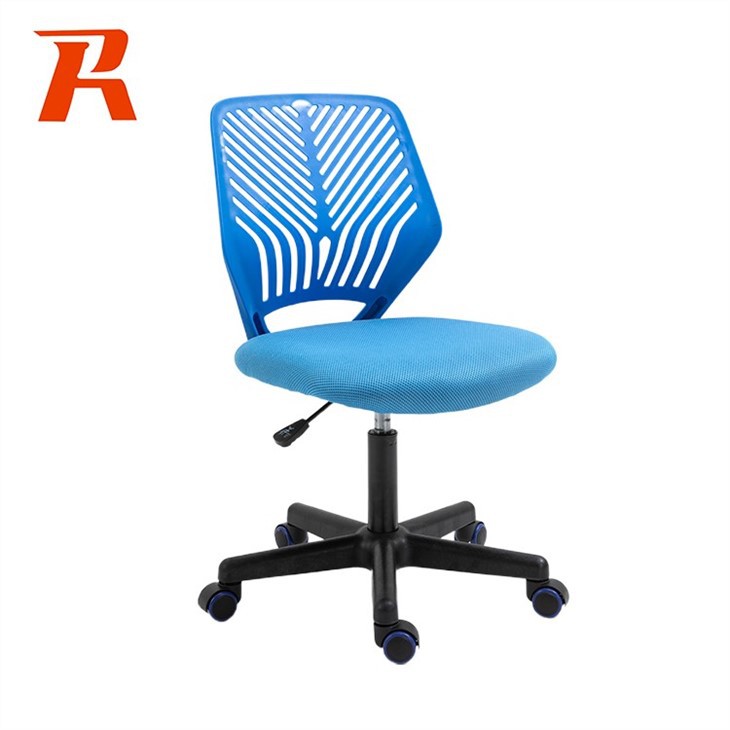
On the contrary, if the chair is too low, the child's knees are higher than the hips, the pelvis is forced to turn backward, and the natural "S-shaped" curve of the spine is compressed into a "C-shaped", causing the waist to lose support and the back to bow forward. What's more serious is that this posture will also cause the abdomen to be compressed, the back of the thighs to press against the chair surface, and blood circulation will be blocked.
The ergonomic children's chair realizes the adaptation of the chair to the body through the two functions of "height adjustment" and "sitting depth adjustment". The height adjustment allows the chair to be adjusted to a suitable position according to the child's height and leg length, ensuring that the feet can naturally lie flat on the ground or footrests, forming an effective lower limb support point.
The seat depth adjustment refers to the available depth of the seat from front to back, which can be adjusted according to the child's leg length. When the child's back is against the back of the chair, the sitting depth should be just enough to keep the knees bent at about 90 degrees. Leave a gap of 2-3 finger widths between the knee socket and the front edge of the chair to prevent the front edge from compressing the thigh blood vessels.
Scientifically designed cushions
Children usually need to remain seated for a long time when studying. During this process, whether the seat cushion is comfortable or not directly affects the stability and sustainability of the sitting posture. Ordinary children's chairs often use cushions with hard materials and flat designs, which cannot adapt to the characteristics of the child's pelvic structure and weight distribution. When a child sits on this kind of cushion, the two points of the ischium become the main force-bearing areas. Due to the lack of cushioning, local compression is easy to occur, leading to poor blood circulation, numbness and even pain in the buttocks. This discomfort for a long time will prompt the child to frequently change sitting postures, such as crossing the legs, leaning forward, leaning on the side, etc., in order to seek short-term relief.
The ergonomic children's chair follows the structural characteristics of the human body in its seat cushion design, using a "soft yet hard" material combination - the surface is soft to cushion pressure, and the inner core is hard to provide support. What's more, the seat cushions usually have a slightly concave design. This structure expands the load-bearing area, spreads pressure from the two points of the ischium to the entire hip area, and reduces local compression.


