

What Maintenance Routines Extend the Life of Children Chairs?
Apr 18, 2025

As a piece of furniture that is frequently used when children grow up, the service life of children's chairs not only depends on the quality of the material itself, but also is closely related to the daily use and maintenance methods. Therefore, this article will introduce how to maintain children's chairs from many aspects to help users extend their service life.
The core load-bearing structure of children's chairs is usually composed of screws, rivets, buckles and other connecting parts. These connecting parts can withstand the multi-directional forces caused by children's repeated standing, shaking, rotating and other movements for a long time. Over time, metal screws will loosen due to vibration, and plastic clips will also wear and deform. If this accumulated loosening problem is ignored, the chair may suddenly break or become unbalanced during use, and in severe cases, the chair may even cause the child to fall. Therefore, it is recommended to check all visible connecting parts by hand every two weeks, focusing on whether the chair legs, backrests, adjustment handles, etc. are shaking or loose; if any abnormal noise or jamming is found, tighten or replace parts in time to fundamentally prevent the accumulation of hidden dangers that lead to structural failures.
Control ambient temperature and humidity
Common materials for children's chairs include solid wood, plastic, metal or composite materials. Different materials have different sensitivities to environmental conditions, but they are all prone to performance degradation under extreme humidity or temperature changes. For example, solid wood chairs will absorb moisture and expand in a humid environment and shrink in a dry environment, causing deformation, cracks, or joint detachment; plastic materials will undergo oxidation reactions after being exposed to the sun, causing the surface to turn yellow, embrittle and crack; metal structures will rust and corrode under moisture erosion, affecting the load-bearing capacity. Once these changes occur, they are often irreversible and extremely difficult to repair. Therefore, children's chairs should be placed indoors in a well-ventilated, dry and light-free location, and avoid being close to windows, radiators, bathrooms, kitchens and other areas where heat and humidity meet. If you are in an area with high humidity in the south, it is recommended to use a dehumidifier during the rainy season; during the heating period in the north, you need to avoid sunlight exposure and direct air conditioning.
Use Less Corrosive Cleaning Methods
In order to quickly clean the chair, many parents use high-concentration disinfectants, alcohol wipes or even bleach to wipe the chair surface directly. However, they do not know that these ingredients will accelerate the aging of the chair surface material, especially the plastic and painted surfaces, which can cause fading in mild cases and surface cracks in severe cases. The correct approach should be to use warm water and neutral detergent, and wipe it regularly with a soft cotton cloth, paying special attention to seams, screw holes, grooves and other places where dirt easily accumulates; for fabric seat cushions, follow the label instructions for dry cleaning or low-temperature washing to avoid fiber breakage caused by strong alkaline cleaning. If the chair design allows, the cover can be removed and cleaned regularly or the seat cover can be replaced to maintain hygiene while avoiding the growth of microorganisms caused by residual stains. In addition, the residual moisture should be wiped off with a dry cloth immediately after cleaning to prevent moisture penetration from causing the wood to swell or the metal parts to rust.
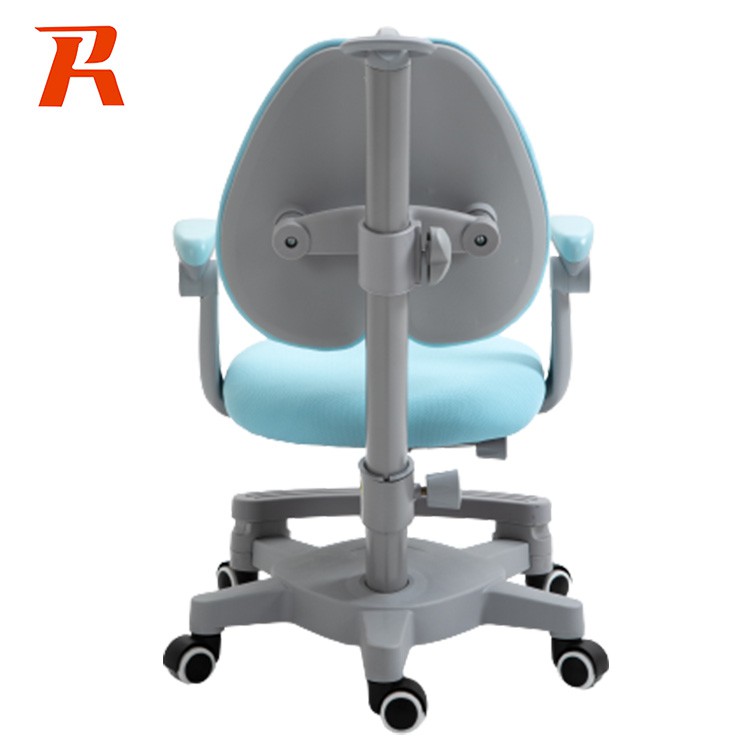

Standardize Usage Behavior
No matter how sturdy a chair is, it cannot withstand the damage caused to it by repeated irregular use. It is easy for children to use chairs as toys, such as jumping on the chair, pushing the chair as a skateboard, repeatedly rotating the lift button, or even multiple people sitting on the same chair. These behaviors will cause the mechanical load of the chair to far exceed the design upper limit. This not only aggravates the damage to the chair's support structure. Therefore, parents should provide guidance and education to their children from the first day they use the chair, and clearly tell their children that the chair is for sitting and not for playing, and it is not allowed to jump, move or use it as a ladder. At the same time, for children's chairs with adjustable functions, it is recommended that adults assist in lifting, rotating and other operations to prevent children from improper use causing internal air rod failure or moving parts getting stuck, which directly affects the overall structural life of the chair.
Lubricate Moving Parts Regularly
Many children's chairs have height adjustment, angle tilt, folding and storage functions, which all rely on internal metal slide rails, air pressure rods, rotating bearings and other precision structures. Under frequent use, these parts are prone to accumulate dust, resulting in a decrease in lubrication, which may cause the operation to become stiff and produce abnormal noise, or the internal parts to wear and fail, resulting in structural failures such as jamming or derailment. Therefore, the moving parts should be lubricated and maintained every 3 to 6 months. Use non-toxic silicone-based lubricating oil or special mechanical grease, apply it to the slide rails and moving joints, and wipe off excess grease to prevent contamination of the chair surface.


