

What Protective Features Can Extend Bar Stool Lifespan?
Apr 18, 2025

Bar stools are common furniture in commercial and home spaces and are widely used in bars, restaurants, kitchen islands and other scenes. Due to high frequency of use, parts of the structure of bar stools are susceptible to wear or damage. Understanding these vulnerable locations can help you pay attention to key design details when purchasing products, and can also provide guidance on daily maintenance, thereby extending the service life of bar stools.
The seat surface is the part of the bar stool that has the most direct and frequent contact with the user. Naturally, it is also the most prone to wear and tear. When we sit on a bar stool, all or most of the weight of the body is concentrated on the seat, and the continuous pressure will have an impact on the internal structure of the seat material. For soft seat surfaces filled with sponge, long-term sitting pressure will cause the sponge to lose elasticity and collapse, making the seat no longer comfortable and the appearance no longer full. At the same time, the fabric of clothing will continue to rub against the seat material, especially rough fabrics such as jeans. Over time, the fabric seat surface may pill, become thinner, or even fray; leather (whether genuine leather or artificial leather) seat surfaces may fade, crack, or peel; and solid wood or plastic seat surfaces, although relatively hard, may also leave scratches due to scratches by hard objects such as keys and jewelry, or may produce micro cracks or dents due to repeated pressure.
foot lever
Bar stools are usually taller, and most are equipped with a foot bar to facilitate the user's getting up and down and to provide support for the feet. When people get on and off bar stools, they often step on the foot bars first to use force; when sitting, they also habitually rest their feet on the foot bars. This means that the pedals not only have to withstand constant pressure from your feet, but they also have to withstand repeated friction and scratches from the soles of your shoes, especially those with hard or gritty soles. For metal foot pedals, the electroplating or spray paint layer on the surface is most likely to be worn away by repeated friction, exposing the metal underneath, which may rust or lose its luster. Wooden pedal poles are more likely to be scratched, dented or even wear off a layer of wood. If the protective layer of paint is damaged, moisture is more likely to invade, causing the wood to deform or crack. Although plastic foot bars cost less, they are also more likely to leave visible marks due to scratches and even break under greater pressure.
Stool Legs And Base
As the basis for supporting the weight of the entire bar stool and the weight of the user, the stool legs or base are also parts that are prone to wear and tear. The bottoms of the legs of four-legged bar stools are in direct contact with the ground. If the ground is uneven or the bar stool is dragged when moving, the bottoms of the legs will rub violently with the ground, causing wear and scratches on the bottoms. Even if protective pads are installed at the bottom of the stool legs, the protective pads themselves will wear and fall off over time and lose their protective effect. For bar stools with a single central support column and a round/square chassis, the edges of the chassis are areas that are prone to bumps, such as being hit by a vacuum cleaner, kicked by passers-by, etc., which can easily lead to paint peeling, deformation or scratches. In addition, the connection between the stool legs, the seat surface, the foot lever and other components are subject to structural stress. Under repeated use and load-bearing, the connection parts may become loose and worn, causing the bar stool to shake.

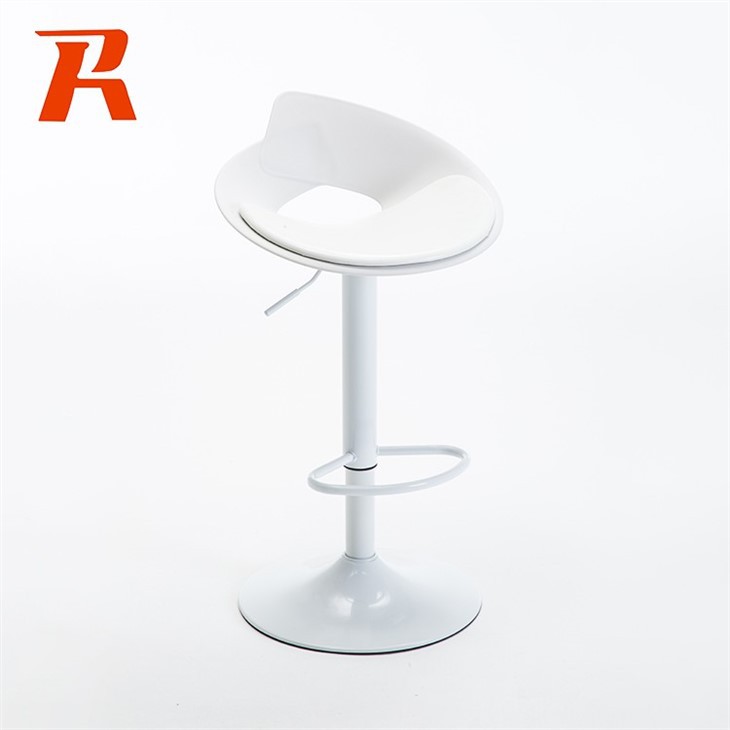
Rotation And Lifting Structure
The core of the rotating structure is bearings or similar rotating parts. Frequent rotation will cause friction and loss in these parts. Over time, it may cause the rotation to no longer be smooth, make abnormal noise, or even become stuck or excessively loose. If dust, hair and other debris enter the rotating mechanism, the wear process will be accelerated. The air pressure lifting rod uses the pressure of gas to achieve height adjustment. Its internal seals and pistons will gradually age and wear during repeated compression and release processes. This can make it difficult to raise and lower the stool or prevent it from locking at a specific height.
Backrest
When people lean back, the backrest needs to bear the pressure of the body, especially the waist and back areas, which will cause a certain amount of squeezing and friction on the filling and surface materials of the backrest. If the frame structure of the backrest is not strong enough, or the connection design is unreasonable, long-term leaning pressure may cause the connection to loosen, the frame to deform or even break. In addition, many people are accustomed to grabbing the upper edge of the backrest to move the bar stool. This action will cause friction and pressure on the material in the grip area (whether it is fabric, leather, wood, or plastic), which may cause the area to wear, deform, or become dirty over time.


